
Council has a regulatory role in the protection of heritage places under the Resource Management Act 1991.
These heritage schedules within the Christchurch District Plan(external link) provide regulatory protection for heritage places:
- Schedules of sites of Ngāi Tahu cultural significance(external link)
- Schedules of significant trees(external link)
- Schedule of significant historic heritage(external link)
- Schedule of heritage areas(external link)
The schedules of heritage items (sites) and heritage areas are supported by the Council’s Heritage Team in consultation with Council resource consent staff.
Council heritage staff and consultants provide specialist advice to owners and Council resource consent staff at the pre-application and application stages.
Heritage staff also work with Building Consent Officers to find practical solutions where Building Act requirements have the potential to impact heritage values.
Resources are primarily targeted at heritage items scheduled in the Christchurch District Plan(external link). This support includes:
- Conservation advice for all types of heritage buildings. Best practice conservation principles contained in the ICOMOS New Zealand Charter 2010 are promoted as far as practical in the Canterbury post-earthquake context.
- Advice on resource consents for works to scheduled heritage items, including discussions and site visits before any applications are made.
- Access to hard copy heritage files for scheduled heritage items and some non-scheduled items which are able to be viewed at the Civic Offices by appointment.
Contact the Council’s Heritage Team at heritage@ccc.govt.nz.
The Schedule of Significant Historic Heritage Items is contained in Appendix 9.3.7.2 of the District Plan(external link). Items (sites) are identified as highly significant or significant.
For each scheduled item, the schedule includes a link to a statement of significance, which summarises the history and heritage values of the site, and a link to a heritage aerial map, which shows the extent of the protected heritage item and its associated heritage setting.
Heritage areas are scheduled in Appendix 9.3.7.3(external link). Sites in residential heritage areas are rated as defining(external link), contributory(external link), neutral(external link) or intrusive(external link).
For each scheduled residential heritage area, the schedule includes a link to the:
- Heritage area report and site record forms, summarising the history and heritage values of the area and each site.
- Heritage area aerial map, showing the extent of the protected heritage area.
- Heritage area site contributions map, showing the rating of each site within the area.
- Heritage area and character area overlap map, showing whether a site is also in a character area.
Planning maps, which identify the location of heritage items and their settings and heritage areas, can be accessed via links in the schedules or by searching the district plan online property search(external link).
Contact the Council’s Heritage Team at heritage@ccc.govt.nz.
Resource consent is required for some works to heritage items and settings (sites) and works on some sites in residential heritage areas, which are scheduled areas in the Christchurch District Plan. Other works are permitted subject to meeting certain standards.
The Christchurch District Plan(external link) provides for the protection of significant historic heritage while also recognising the impact of the Canterbury Earthquakes and engineering and financial factors on the ability to retain, restore and continue using heritage properties.
The rules for protected heritage properties are generally contained in Chapter 9.3 of the District Plan(external link).
Maintenance, repairs, and heritage investigative and temporary works (external link)are generally permitted subject to meeting standards in the District Plan(external link).
Signs are permitted on protected heritage properties where they comply with the signage rules in Chapter 6.8 of the District Plan(external link).
Heritage upgrade works, reconstruction and restoration can be carried out as a permitted activity if a Heritage Works Plan certificate (P-025) [PDF, 70 KB] is obtained. The Heritage Works Plan must be prepared by a heritage professional and certified by the Council.
Resource consent is required for:
- Demolition or partial demolition of a heritage item, or demolition of a defining or contributory building in a residential heritage area.
- Alteration of a heritage item and some alterations to a defining or contributory building in a residential heritage area.
- Relocation of a heritage item within or beyond its setting.
- New buildings in a heritage setting or in a heritage item which is an open space.
- New buildings and road boundary fences and walls over 1.5 metres high on sites in a residential heritage area.
- Subdivision of a heritage setting or a heritage item which is an open space under rule 8.5.1.3 RD10 in Chapter 8.5 of the District Plan(external link).
- Any works that don't meet the permitted activity standards in the District Plan(external link).
The rules vary depending on the type of work proposed and the significance of the heritage site. For more information about the District Plan rules for your particular site, please contact our Duty Planner via email to dutyplanner@ccc.govt.nz.
Advice to owners of heritage items and heritage areas is also available from the Council's Heritage Team at heritage@ccc.govt.nz.
The rules for heritage items in the District Plan(external link) restrict changes to heritage items and heritage fabric which affect heritage values.
In some circumstances, it may be appropriate to apply for a Non-Heritage Fabric (P-026) [PDF, 69 KB] certificate, for example, for interior fabric of heritage items which have interior protection in Appendix 9.3.7.2(external link), to confirm that certain fabric is not heritage fabric and change to this fabric is not subject to the rules in sub-chapter 9.3.
Please check the relevance of this certificate with the Council's Heritage team before preparing an application, as amendments to the definition of alteration(external link) as a result of Plan Change 13 recognise that changes to a heritage item, such as additions, which do not always affect heritage fabric, still require resource consent because they may affect heritage values.
The Non-Heritage Fabric (P-026) [PDF, 69 KB] request form must be accompanied by an assessment from a heritage professional.
A heritage professional(external link) is a person with specific qualifications and experience in heritage conservation or management, as defined in Chapter 2 of the District Plan as amended by Plan Change 13.
Some of the heritage rules allow work to be carried out without resource consent if a heritage professional is involved.
The people below have demonstrated the experience necessary to meet the definition of a heritage professional.
When contacting a heritage professional, you will need to check whether they consider the proposed works to be within their professional remit or not.
For more information on this list, contact the Council’s Heritage team at heritage@ccc.govt.nz.
Heritage professionals:
- Maria Adamski, maria.adamski@ccc.govt.nz, 027 232 7594
- Ian Bowman, ian@ianbowman.co.nz, 027 445 7813
- Alec Bruce, alecb@wilkieandbruce.co.nz, 03 379 7739
- William Fulton, william.fulton@teamarchitects.co.nz, 03 366 7165 or 027 269 2759
- Patrick Harsveldt, patrick@heritagearchaeologyservices.co.nz, 027 498 3078
- Phillip Hartley, philliph@salmondreed.co.nz, 09 445 4045 or 021 372 277
- Tracey Hartley, traceyh@salmondreed.co.nz, 09 445 4045 or 021 372 388
- Wendy Hoddinott, wendy@gatherla.nz, 0274 766 813
- Tim Holmes, tim.holmes@heritageworks.co.nz, 021 024 20829
- Carole-Lynne Kerrigan, clkheritage@gmail.com, 021 671 355
- Jenny May, jenny@hms.net.nz, 03 323 5732 or 027 593 7310
- Ann McEwan, amcewan@slingshot.co.nz, 03 926 2857, 021 296 7431
- Dave Pearson, dave@dpaarchitects.co.nz, 09 445 8544 or 027 497 2205
- Chessa Stevens, chessa@chessastevens.co.nz, 0274 994 796
- Alex Vakhrousheva, avakhrousheva@heritage.org.nz, 027 286 7680
These guidelines were developed soon after the first Canterbury earthquake in 2010.
They are intended as guidelines for owners of heritage and character buildings to assist with repair and maintenance of these buildings and apply to any earthquake or building damage.
- Heritage Guideline 1 [PDF, 259 KB] – Safe and secure
- Heritage Guideline 2 [PDF, 335 KB] – Repairs to the heritage building
- Heritage Guideline 3 [PDF, 305 KB] – Reconstruction of elements
- Heritage Guideline 4 [PDF, 215 KB] – Strengthening of buildings
- Heritage Guideline 5 [PDF, 148 KB] – Professional advice and tradespeople
- Heritage Guideline 6 [PDF, 203 KB] – Heritage Recovery - Guidelines for building owners
Projects involving demolition of buildings or earthworks on sites associated with pre-1900 human activity may also have separate obligations relating to archaeological sites under the Heritage New Zealand Pouhere Taonga Act 2014 (NZHPT Act)(external link) administered by Heritage New Zealand Pouhere Taonga (HNZPT).
Areas of the Christchurch District with a known high concentration of archaeological sites include: Sumner, Redcliffs, Birdlings Flat, the Central City, Lyttelton and Akaroa. If you are proposing demolition of a pre-1900 building or other earthworks which could modify or destroy a site occupied before 1900 you should check your obligations with HNZPT.
For more information about archaeological sites and the Archaeological Authority process, visit the HNZPT website(external link) or contact HNZPT’s Southern Regional Office at archaeologistcw@heritage.org.nz or 03 363 1880.
Heritage New Zealand Pouhere Taonga
Heritage New Zealand Pouhere Taonga (HNZPT) is an autonomous Crown entity with the role of identifying, preserving and promoting New Zealand’s heritage under the Heritage New Zealand Pouhere Taonga Act 2014 (HNZPT Act)(external link).
HNZPT offers heritage advice and maintains and administers Rārangi Kōrero/The New Zealand Heritage List(external link) which includes Historic places, Historic areas, Wāhi tūpuna, Wāhi tapu and Wāhi tapu areas.
HNZPT advocates for the entries on the list. Statutory protection of heritage sites and areas sits under the District Plan. Most significant heritage items in the district will appear on both the Christchurch District Plan schedule and the Heritage New Zealand list, however, there may be cases where places do not appear on both. The council consults with HNZPT in relation to entries on the Rārangi Kōrero/The New Zealand Heritage List.
Under the HNZPT Act, Heritage New Zealand is charged with the protection of archaeological sites. For information on archaeology and the requirements for Archaeological Authorities, visit Heritage New Zealand(external link).
If you require any information on Heritage New Zealand Pouhere Taonga listed places, heritage orders, or covenants, contact the Heritage NZ Southern Regional Office:
- Physical address: 64 Gloucester Street, Christchurch 8013
- Postal address: PO Box 4403, Christchurch Mail Centre 8140
- Phone: 03 363 1880
- Email: infosouthern@heritage.org.nz
ICOMOS Aotearoa New Zealand/Te Mana ō Nga Pouwhenua ō Te Ao
The International Council on Monuments and Sites (ICOMOS)(external link) is a non-governmental organisation of heritage professionals engaged in the conservation of places of cultural heritage value and dedicated to the conservation of the world's historic monuments and sites.
The ICOMOS New Zealand Charter for the Conservation of Places of Cultural Heritage Value (ICOMOS New Zealand Charter 2010(external link)) is a set of guidelines on cultural heritage conservation.
The Charter is widely used in the New Zealand heritage sector and is a recognised benchmark for conservation standards and practice. It is used by central government ministries and departments, by local bodies in district plans and heritage management, and by practitioners as guiding principles.
The ICOMOS New Zealand Charter 2010 sits as part of the Council’s Heritage Strategy: Our Heritage, Our Taonga, which was adopted by the Christchurch City Council in 2019.
Applications for resource consent for scheduled heritage items should take into account the conservation principles of the ICOMOS New Zealand Charter 2010.
Related news
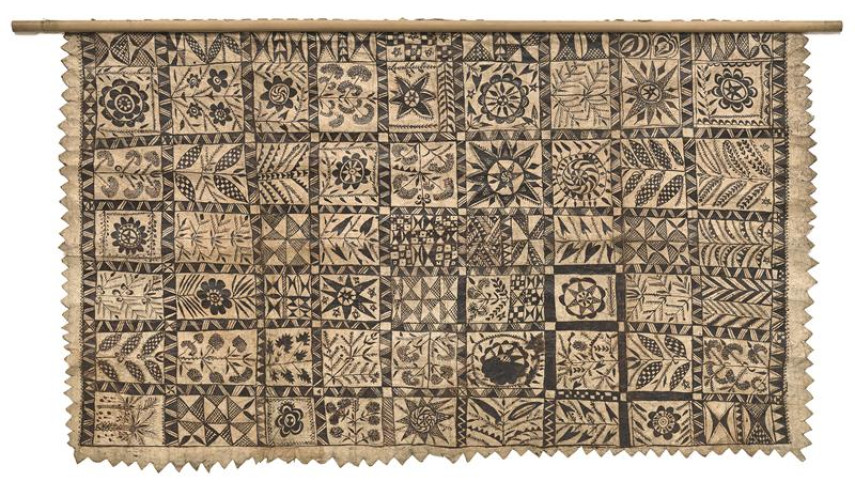
Made in the Pacific: A Collection of Tāoga
A new exhibition at Christchurch Art Gallery Te Puna o Waiwhetū celebrates the enduring significance of Pacific art and craft practices and their strong connection with contemporary artists and artmaking.
26 Mar 2026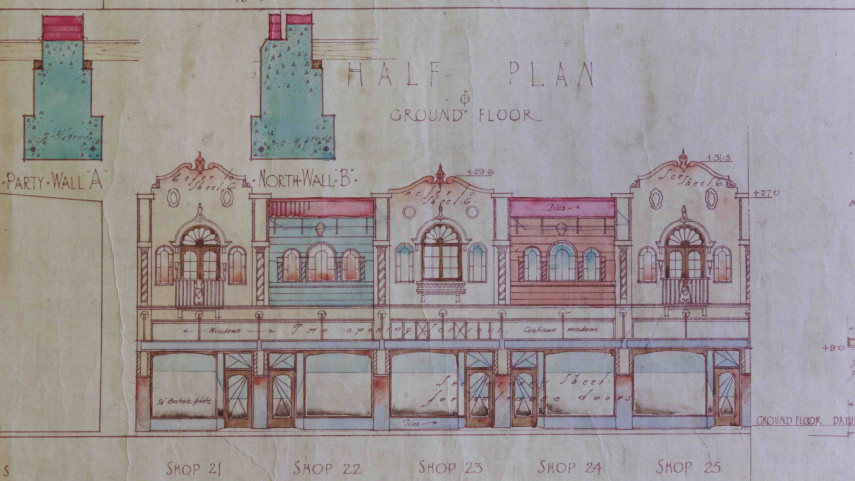
Archives preserve city’s architectural plans
The architectural plans of some of the city’s most significant commercial and public buildings have been carefully preserved for future generations.
16 Mar 2026
Honouring our heritage throughout the rebuild
Following the 15th anniversary of the 22 February earthquake, we’re looking at different Council aspects of the rebuild, and how far we’ve come. Starting with heritage in the city.
23 Feb 2026